
FOUNDER FRIDAY .001
Tahlia Sisney, The Art Girl


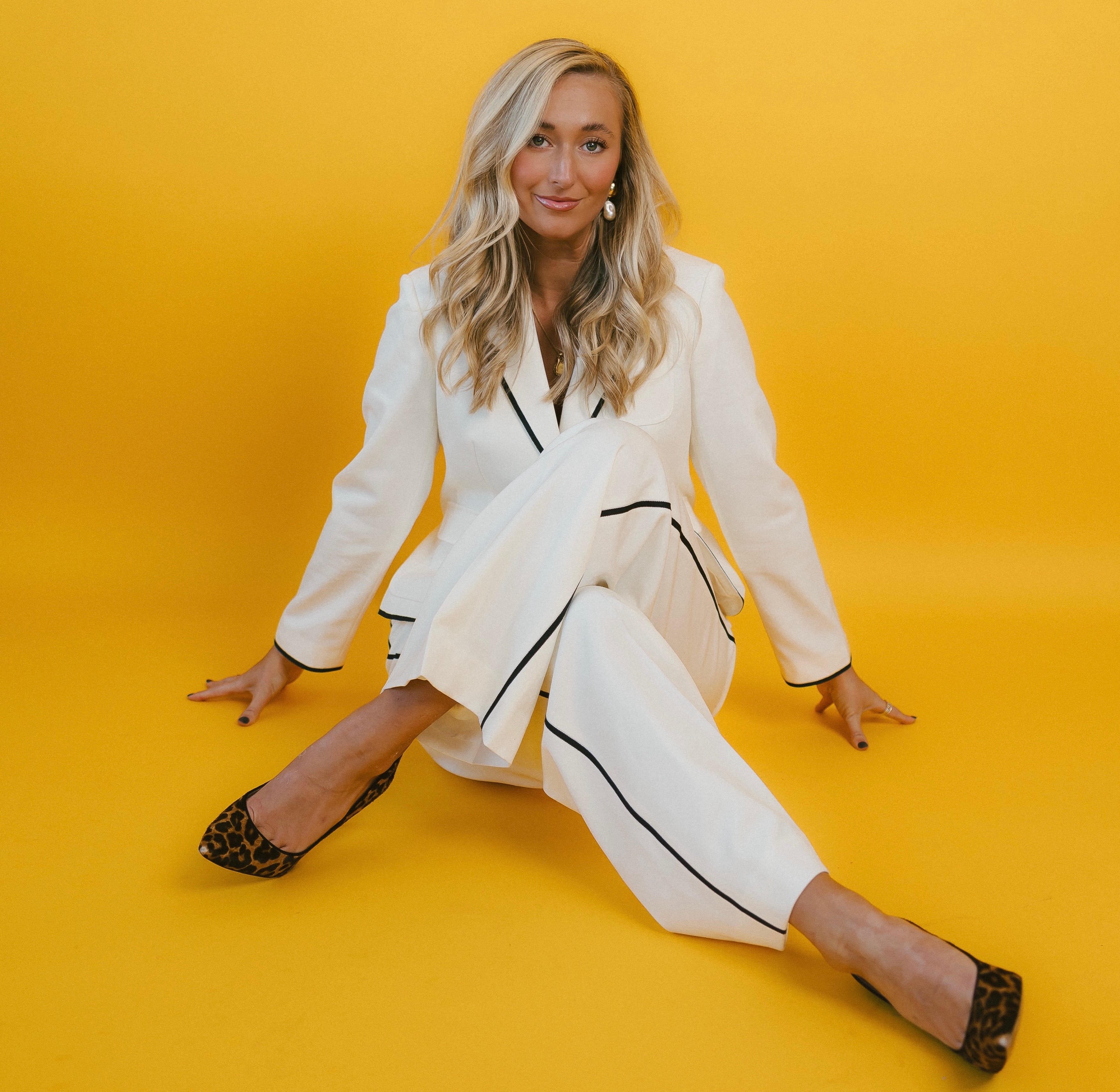
I remember the first time Tahlia came up on my TikTok For You page in the summer of 2024. She was a ball of light and energy, equipped with the most eccentric yet chic outfit, and a knowledge of art she was able to communicate so simply that even someone like me could follow. It’s because of Tahlia that I expanded my own interest in contemporary and modern art, because she made a once intimidating industry feel approachable and exciting.
A year and a half later, I was hiring her.
There’s something very 2026 about finding your art advisor on TikTok. And yet, there she was, standing in the doorway of my NoHo apartment, bubbly and eager, ready to help me turn four walls into something that actually felt like me.
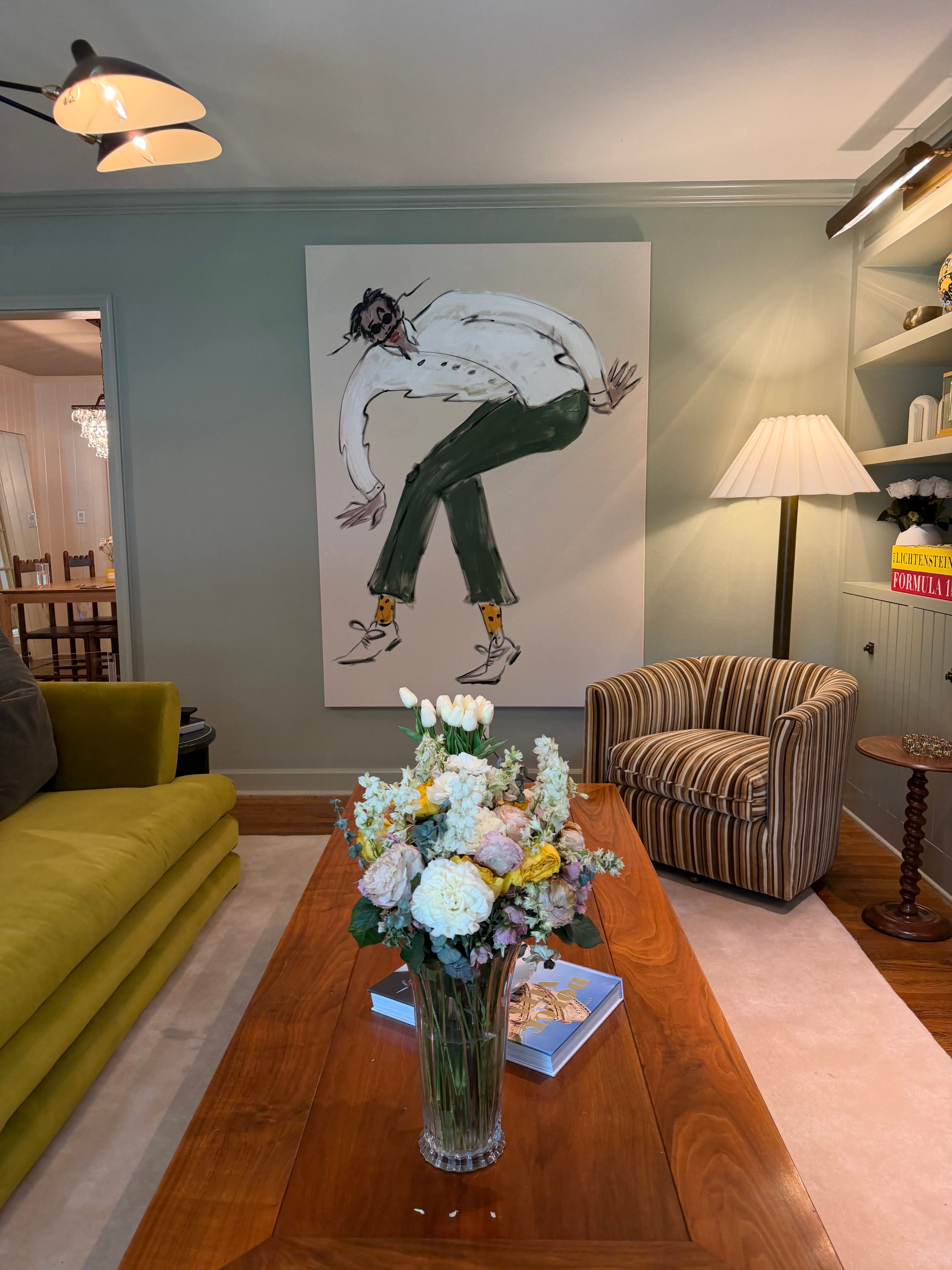
When you walk into my apartment, I want you to feel like you’ve stepped into a Nancy Meyers film. A striped headboard, silky pillows, brushed wool blankets, a cloud of a couch, sterling silver lamps, fresh flowers, wood accents, and everything in natural whites, pastel greens, and baby pinks. But my walls were flat. My apartment needed some whimsy.
We talked for what felt like hours that first day. She examined the space, the colors, my taste, and then just asked me plainly- what do you envision? I gave her my references: Ralph Lauren in the Hamptons, Gwyneth Paltrow’s Brentwood home, every set in every Nancy Meyers movie ever made. She caught the vision immediately.
In the days that followed, I had a deck full of sourced pieces. But nothing was quite right. That’s when Tahlia suggested a custom piece, and introduced me to the artist Caroline Pinney, an emerging name whose work I’m now having commissioned for above my bed. Tahlia assured me I was making a true investment, and I believed her, because that’s what she does. She listens, she understands, and she guides you through a world that has spent a very long time trying to keep people excluded.
Meet Tahlia Sisney: The Art Girl.
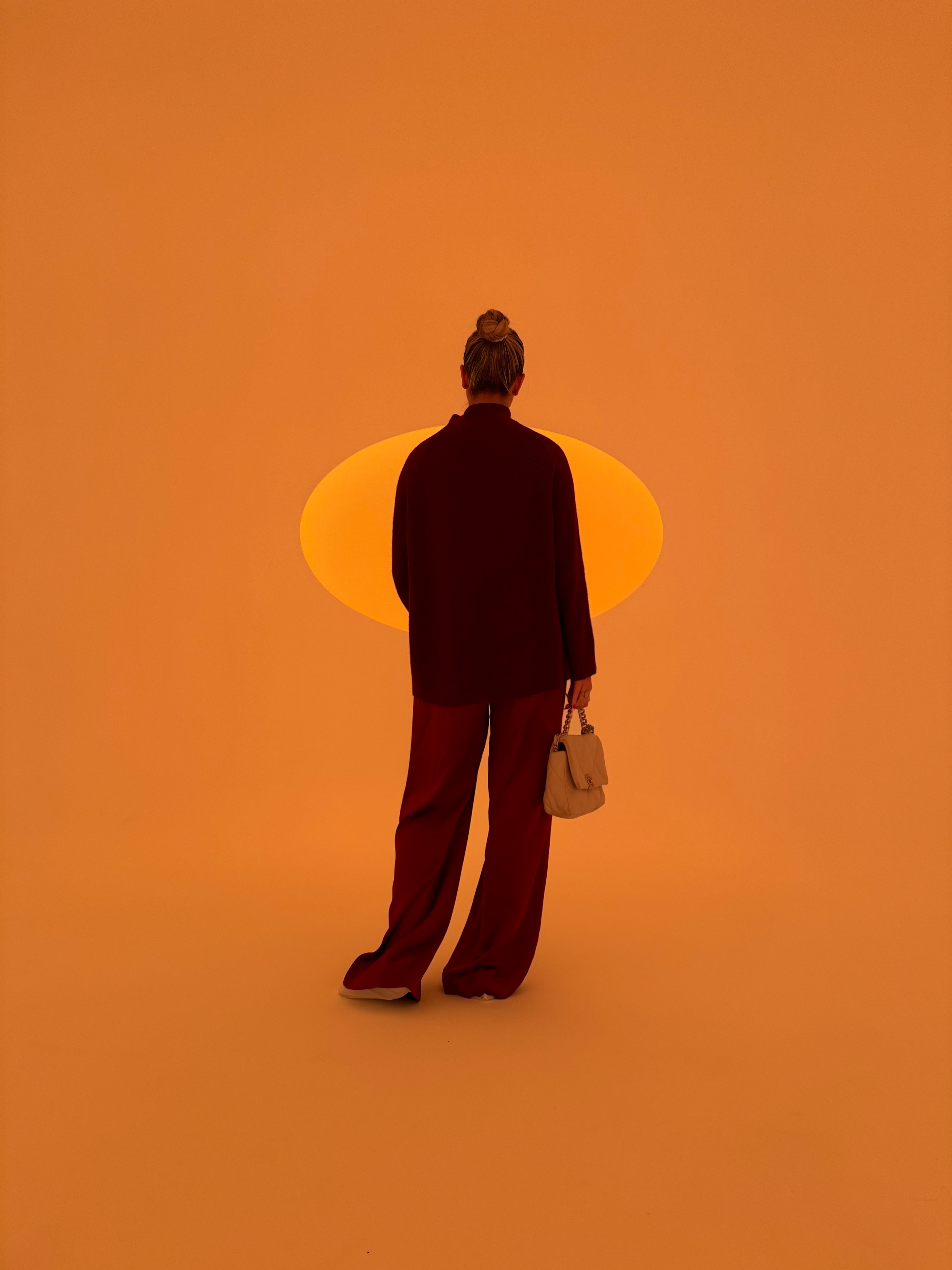
Tahlia is an independent art advisor, writer, and self-described purveyor of nice things, based in New York and working everywhere. After building her advisory practice from the ground up, she identified a gap in the infrastructure available to art professionals and built Opusfolio, a platform designed to modernize how advisors operate. Her work sits at the intersection of art and technology, and somehow makes both feel deeply human.
Caroline: You went to Sotheby’s Institute, which is about as credentialed as it gets in the art world, and then you immediately started making the art world less exclusive. Was that a reaction to what you saw inside, or something you always believed before you got there?
Tahlia: I think it was both. I grew up around art collecting and antiquities, so art never felt intimidating to me. It felt intellectual and natural and part of the human experience. But when I entered the contemporary art world professionally, I realized very quickly how inaccessible it can feel to people who didn’t grow up in industry. There’s this unspoken language and gatekeep-y culture where people almost feel rewarded for making others feel like they don’t know enough to participate.
When I started at Sotheby’s Institute, I became even more aware of that dynamic. I was surrounded by incredibly smart people, but I also noticed how many conversations centered around limitation. When it came around to graduation time, my peers talked a lot about how impossible the industry was, how few opportunities existed, and how difficult it was going to be to break in without a boatload of nepotism or capital backing them. Meanwhile, all I could see was opportunity everywhere. I think that mindset shift is what kickstarted my entire career. While other people were waiting to be invited into rooms, I was emailing people directly, asking questions, introducing myself, following up, showing up to openings, studying dealers, reading constantly, writing about everything, creating opportunities for myself before anyone formally gave me permission to. During school, I treated every assignment seriously and engaged with my professors. I exploited every single opportunity I had at my fingertips. I sat on a leadership council, worked as a graduate assistant, interned for an advisory, curated my first exhibition, traveled internationally for fairs, and immersed myself as much as I could in the ecosystem without actually receiving a paycheck for something (yet). The goal here was greatness, and I wasn’t afraid to pursue it.
What Sotheby’s Institute really gave me was confirmation that the art world is not untouchable. It’s built by people, and if it’s built by people, it can evolve. That realization became the foundation of everything I do now. Through my writing, content, advisory practice, and now Opusfolio, my goal is to make people feel welcomed into the art world instead of intimidated by it. Art shapes culture and preserves history. It deserves a future that is bigger, younger, more transparent, and more inclusive than what we’ve had in the past.
C: The art world runs on relationships that take decades to build. You’re young and you built yours fast. What did you do that older advisors weren’t doing?
T: I think I move with a level of urgency and openness that a lot of people in the industry underestimate. For some background, the art world traditionally rewards patience, hierarchy, and slow access. But I realized early on that relationships are built through genuine curiosity and consistency, not just time. Also, I was on a time crunch. I was a twenty something post-grad with an “entrepreneurial spirit,” as a teacher told me once, and I needed to make money. I wasn’t going to and didn’t have the opportunity to wait ten years to introduce myself to people I admired. And frankly, that’s not who I am anyways. I want to hustle and be important and be in rooms where people are like “Wait, how old are you again?” Being successful at a young age is always something I’ve strived for. So with that being said, yeah, I was sending the cold email. I was asking someone to coffee. I was following up after fairs and making sure the directors and sales associates recognized me at the next one. I spent hours reading interviews with major dealers and studying how they built influence. I’ve spent a good amount of time studying people like Larry Gagosian and Daniel-Henry Kahnweiler, Picasso’s dealer. Their business success fascinates me, but their ability to build trust, conviction, and cultural momentum around artists before the rest of the world fully understood the vision is really what Im inspired by. They were not passive observers, they literally the shaped ecosystem.
I also think younger collectors and artists respond to me well because I approach the industry differently. I never want to perform exclusivity. I want people to feel comfortable asking questions. I want new collectors to feel excited instead of intimidated. I want artists to feel understood. Funny enough, the human approach is a very effective method.
Social media and the digital age also accelerated relationship building in ways for me that I think the older generation still probably can’t fathom. I understood early that my content was not separate from credibility, it was an extension of it. Substack, my videos, my commentary, all of it became a way for people to understand how I think before ever actually meeting me. By the time that new client or new collector actually spoke with me, there was already trust established. But ultimately, relationships only last if you maintain them with integrity. I took that seriously from the beginning and still do. I want to be friends with my clients and build a relationship, this is the long game, not short. And I think people feel that I genuinely love the work and love building that legacy for them, not just the image of the industry.
C: You’re advising clients on what art to buy, which is deeply personal, emotional, and driven by ego. How do you protect your eye when a client is convinced they know better?
T: One of the most important things I’ve learned is that advising is not about overpowering someone’s taste. It’s about refining it, contextualizing it, and helping them understand why they respond to certain work in the first place. Art is very emotional and it should be emotional. A collection should feel like an extension of someone’s psychology, intellect, memory, and story. My role is not to erase that. My role is to guide it with perspective and long-term vision.
There are definitely moments where clients become attached to something for the wrong reasons though: hype, social validation, market noise, ego etc. In those moments, protecting my eye means just being honest. I would rather lose a sale than advise someone toward something I fundamentally don’t believe in. That’s not really my style. At the same time, I never approach clients from a place of superiority. I think the best advisors know how to listen first. Sometimes a client is reacting to something emotionally before they have the language to explain why. My job is to uncover that and help them build a collection that still feels intellectually cohesive over time.
I also think my background helps me tremendously here. Coming from a family with roots in taste and antiquities taught me that truly great collections are built through conviction and scholarship, not trend cycles. The market changes constantly. Taste changes and evolves. But a strong eye is developed through study, curiosity, and instinct. This is the currency I provide to my clients. At the end of the day, BWYL, buy what you love.
C: Who in the art world took you seriously before you had the credentials to demand it, and what did that do for you?
T: I owe an enormous amount to the people who believed in me early, especially my first clients. I’m 24 and still learning so much. I’m by no means an art historian or a dealer extraordinaire. But those first few clients I had, they trusted my vision completely. They allowed me to source for them, advise them, create something beautiful and meaningful, and most importantly, document that process publicly as I was growing my business. That level of trust changed my life.
I also had mentors and industry figures who responded to my ambition before I had traditional authority. I think people can sense when someone is genuinely obsessed with the work. I was never casually interested in this industry. I studied it relentlessly. I read constantly. I researched dealers, artists, market history, institutional movements. I treated every opportunity as meaningful and as if it was an opportunity and I showed up prepared. In New York, you never know who you’re going to meet and you always have to be ready.
I think that matters more than people realize.
There’s also something powerful about being young and not yet conditioned by limitation. I wasn’t approaching people thinking, “They’ll never respond.” I approached them believing there was always a possibility of connection. That optimism created opportunities that probably would not have existed otherwise. Maybe it’s my midwest charm, I don’t know.
Every person who took me seriously early on gave me more than opportunity, they gave me confidence. They reinforced the idea that expertise is not only built through age. You can reap the same success through commitment, discipline, taste, and the willingness to immerse yourself fully in the work.
C: You went from advising on art to building the tech infrastructure for art advisors. Most people pick a lane. What made you realize the tool didn’t exist, and that you were the one who had to build it?
T: Because I was living the problem every single day.
When I started scaling my advisory business, I realized almost immediately that there was no infrastructure designed specifically for art advisors. Everything felt so fragmented and buggy. I was juggling spreadsheets, PDFs, inventory tracking, client management, invoices, artist information, fair schedules, shipping coordination — all across disconnected systems that were not built for the way art advisors actually operate. It was maddening and I was losing deals and definitely NOT scaling.
The irony is that the art market is a multi-billion dollar industry, yet so much of its infrastructure still functions manually or through outdated systems. Advisors are expected to operate at an incredibly high level while piecing together operational workflows themselves.
I kept thinking, how has nobody solved this yet?
At a certain point, I realized I could either continue struggling through the inefficiency or build the solution I wished existed. That became Opusfolio.
The coolest thing about it is that I didn’t build it from theory. I built it from my own experience. Every feature came from an actual operational pain point inside The Art Girl. because of that, the response has been incredible. Since implementing Opusfolio into my own workflow, I’ve quadrupled my revenue in three months because I finally had systems that supported growth instead of slowing it down. So, that’s super validating.
I also think this moment in the art world requires a new generation of builders. Not just advisors or dealers, but people willing to modernize the industry itself. The future of the art market cannot rely exclusively on tradition. Like Ive said, It needs infrastructure that supports scale, transparency, accessibility, and global connectivity. That’s what I want to help create and foster.
C: The Art Girl is about accessibility. Opusfolio is about infrastructure. They sound like opposite entities. One opens the door for those who want start their collection and the other builds the back office. How do you hold both of those identities at the same time?
T: To me, they’re actually solving the same problem from opposite directions. The Art Girl exists because I wanted people to feel invited into the art world. I wanted someone with no background in collecting to suddenly realize they were capable of understanding and participating in contemporary art. I wanted to remove the intimidation factor and replace it with curiosity and excitement. But accessibility means very little if the professionals inside the industry don’t also have the tools to grow sustainably. That’s where Opusfolio comes in. Art advisors are often operating as invisible architects behind the scenes of the market. They manage relationships, logistics, strategy, sourcing, education, placement, and long-term collection building, often without adequate infrastructure to support that level of work. If advisors are empowered, organized, and able to scale properly, the entire ecosystem becomes healthier.
So one side of my work is focused outward on cultural access, and the other is focused inward on operational evolution. But both are rooted in the same belief: the art world has the potential to grow far beyond its current structure.
I don’t think the future of the industry belongs exclusively to institutions or legacy power players anymore. I think it belongs to people who are willing to build community, share knowledge, modernize systems, and create new entry points for participation. That’s the work I care about most.
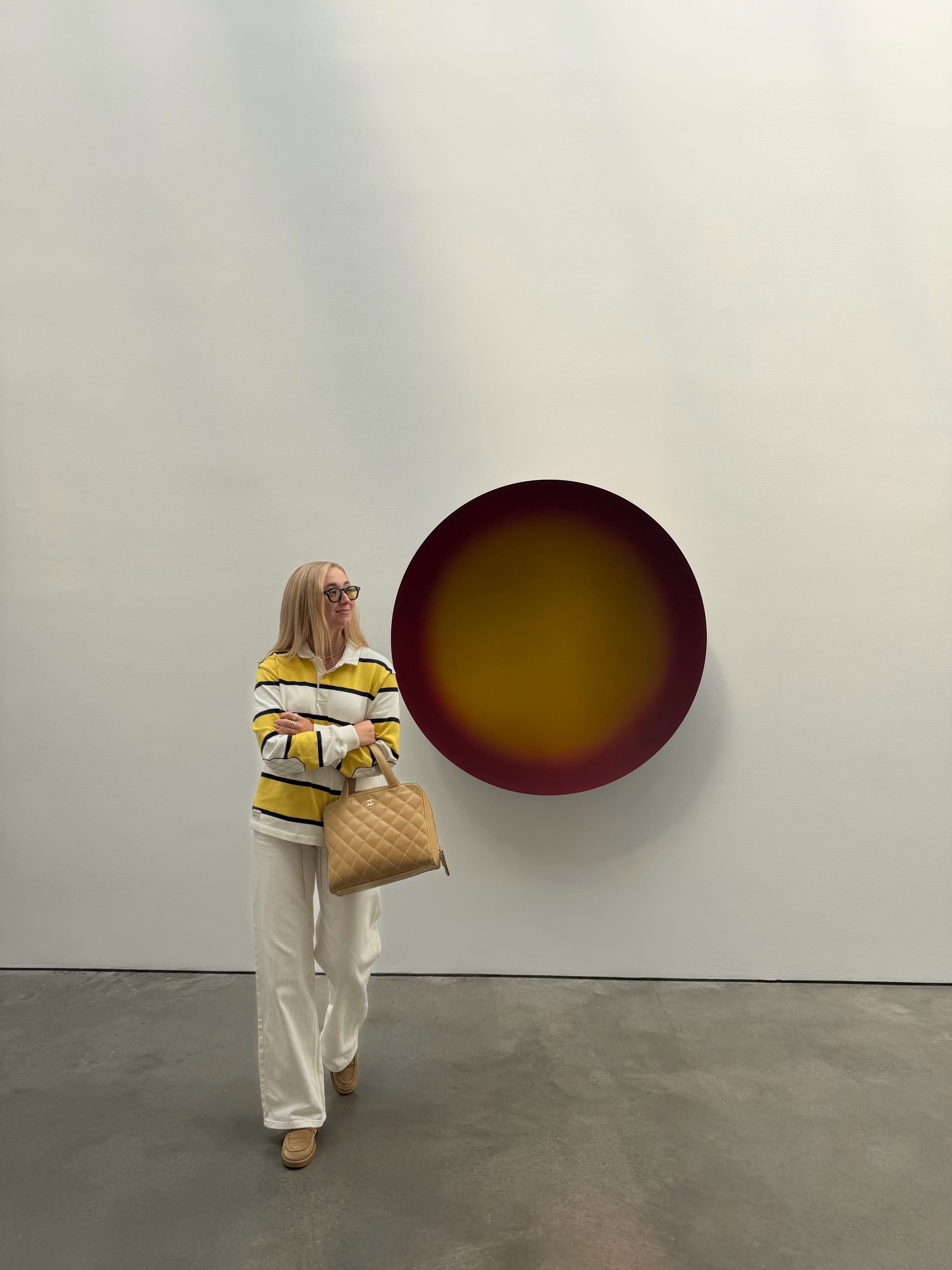
I read back over Tahlia’s responses more than once, in awe of the founder she is. There is something about the way she moves through the world with urgency, with conviction, and without waiting for anyone to hand her a seat. I find it deeply inspiring and, honestly, a little clarifying.
She built her own doors instead of waiting for someone else’s to open. That’s exactly why I started this series.
I’m a young founder too, building a brand from the ground up, and figuring everything out as I go. I came up in fashion, working in PR, alongside influencers and founders, pouring my energy into other people’s visions. But somewhere along the way I looked up and realized the success I was building wasn’t mine. I had a vision of my own, a creative and entrepreneurial spirit that deserved its own outlet, and a story worth telling.
Founder Friday exists because I know I’m not the only one who felt that way.
Every week I’ll be sitting down with a young woman who decided to stop waiting and start building, sharing what she learned along the way. Not because the path is easy, but because seeing someone who looks like you do it anyway makes it feel possible.
See you next Friday.


 | A guest post by
|